How does a toilet flush work?
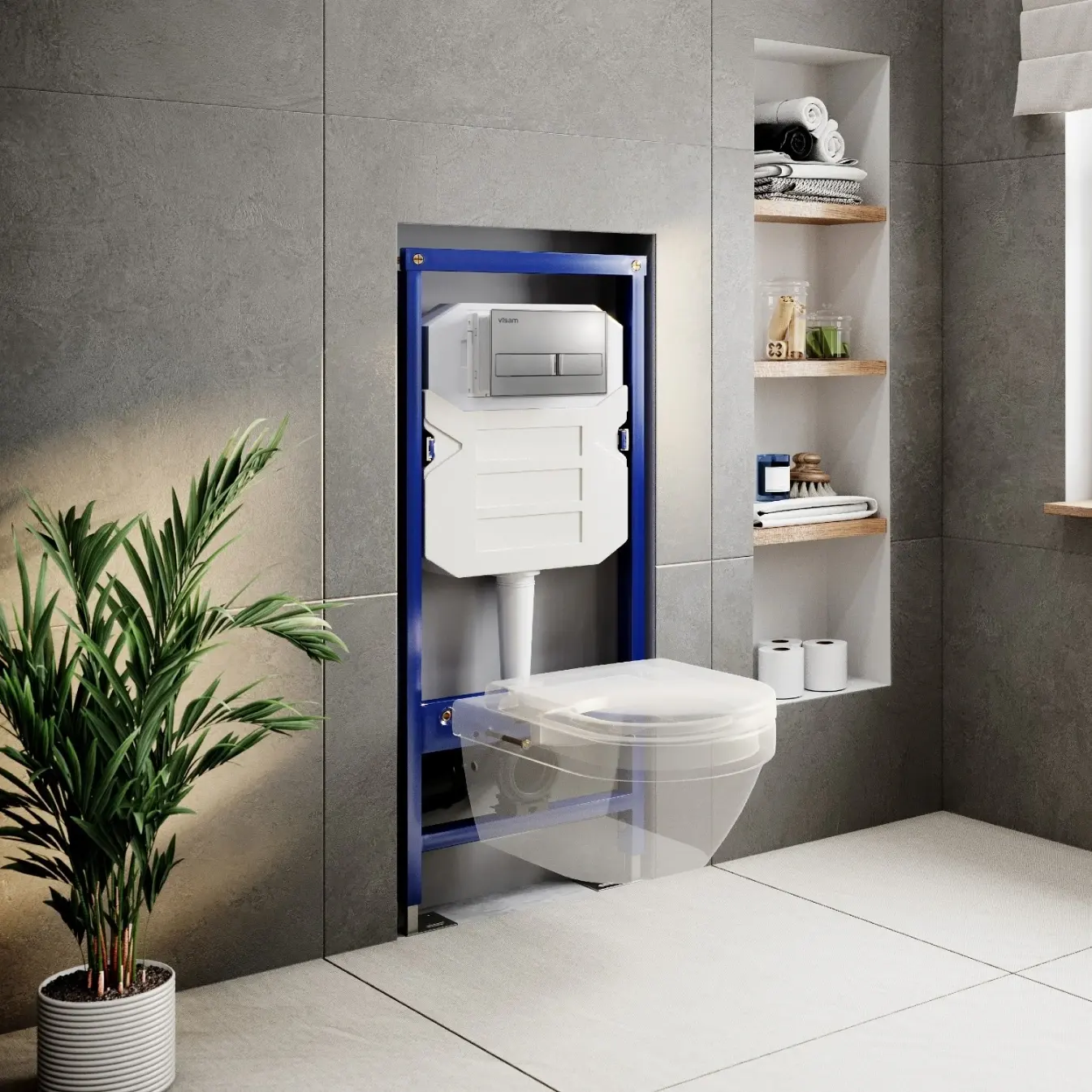
A toilet looks simple, but every flush is a small piece of engineering. When you press the button, the flush valve in the cistern opens and the stored water (usually 3 to 6 litres) rushes down into the bowl by gravity. That water does two jobs: it rinses the inside of the bowl, and it pushes the waste through the trap, the curved channel at the back of the toilet that always holds some water to block sewer smells. As the cistern empties, the fill valve refills it with fresh water and the trap is topped up for the next use.
There are two classic ways the bowl removes waste. In a washdown toilet, the force of the falling water pushes everything out through a wide trap; it is simple, reliable and rarely clogs. In a siphonic toilet, the water fills a narrower trap and creates a siphon that pulls the contents out; it is quieter and leaves a cleaner bowl, but uses a more complex trap. Most modern dual-flush toilets offer a full flush (about 4.5–6 L) and a half flush (about 3 L) to save water.
What has changed most in recent years is how the water enters the bowl. Traditional toilets release water through a hollow rim with small holes all around it. That hidden channel is hard to reach with a brush, so limescale, dirt and bacteria build up there. Rimless and tornado systems were designed to solve exactly this problem.
Rimless flush

A rimless toilet has no hollow rim at all. The top edge of the bowl is open and smooth, and the water is directed by a flush distributor (a shaped outlet at the back of the bowl) that sends it along the inner walls. Because there are no hidden channels, every surface can be seen and cleaned.
Pros
- Much more hygienic: no hidden rim where germs and limescale collect
- Very easy and fast to clean, with fewer chemicals
- Usually works well with low-volume dual flush
- Clean, modern look
Cons
- A poorly designed model can splash over the edge
- Performance depends on a well-shaped bowl and correct water pressure
- Rinsing of the upper bowl can be less even than with a vortex system
Tornado (vortex) flush

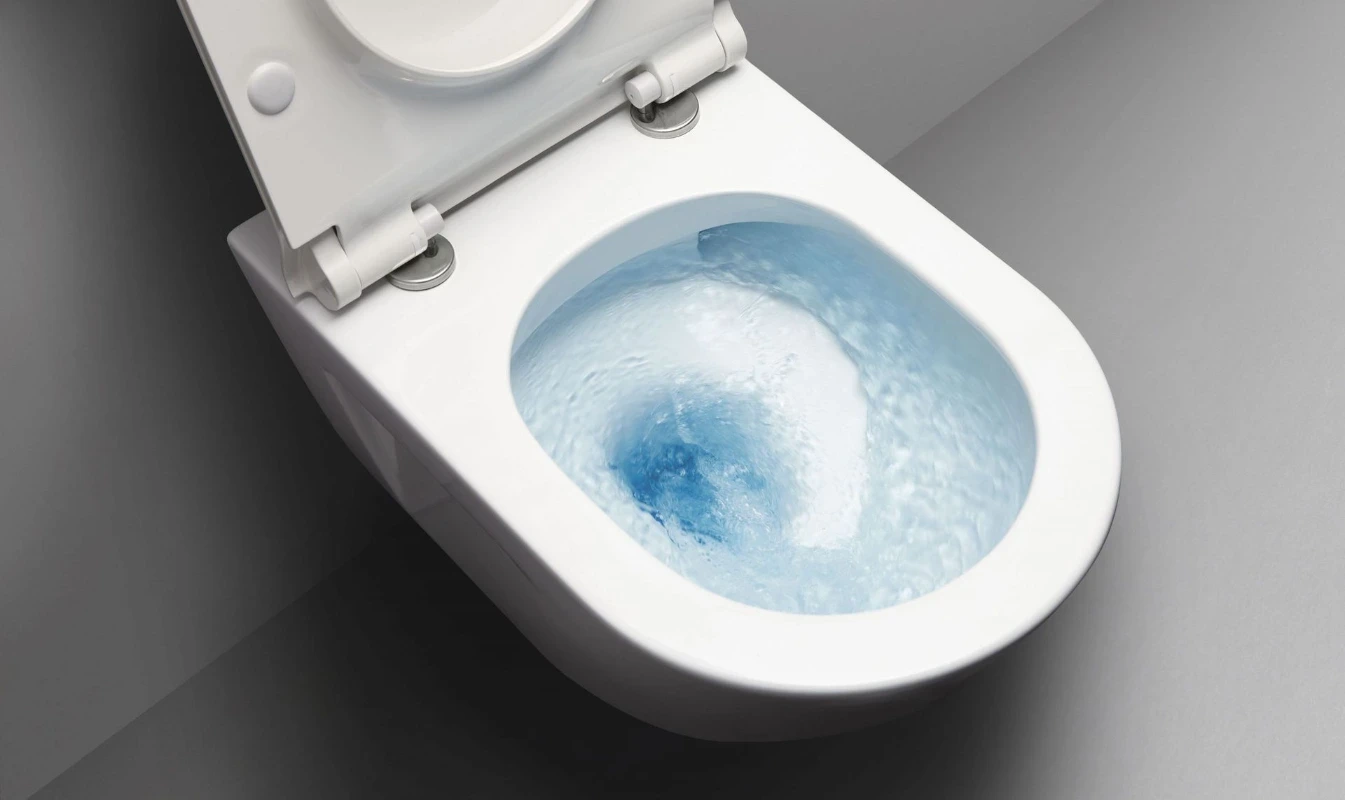
A tornado (also called vortex, swirl or cyclone) flush is a further step. Instead of simply pouring water down, it injects the water through two or three nozzles placed at an angle around the bowl. The jets create a powerful spiral that turns around the bowl and sweeps all of its surface before going down the trap. Most tornado toilets are also rimless.
Pros
- Very thorough rinsing of the whole bowl in a single flush
- Quieter flush than many traditional models
- Little or no splashing thanks to the controlled swirl
- Highly water-efficient, often around 4.5 / 3 L
Cons
- Usually more expensive than a standard rimless toilet
- In hard-water areas the nozzles can build up limescale and need occasional cleaning
- Spare parts and cisterns are often specific to the brand or model
Rimless vs Tornado: side by side
| Rimless | Tornado | |
|---|---|---|
| Water entry | One distributor at the back | 2–3 angled jets creating a spiral |
| Hygiene | Very good | Excellent |
| Cleaning the bowl | Very easy | Very easy |
| Noise | Average | Quiet |
| Splash risk | Low to medium, depends on design | Low |
| Maintenance | Minimal | Occasional nozzle descaling |
| Price | Mid-range | Higher |
Which one should you choose?
If you want an easy-to-clean, hygienic toilet at a sensible price, a rimless model is an excellent choice for most homes. If you want the quietest, most thorough flush and the best water efficiency, and the budget allows, a tornado toilet is worth the extra cost. In both cases, pay attention to the bowl shape, the flush volume and the quality of the glaze.
Not sure which system fits your bathroom? Visit the Turkuaz Bagno showroom: our team will show you both systems in person and help you choose the right toilet.