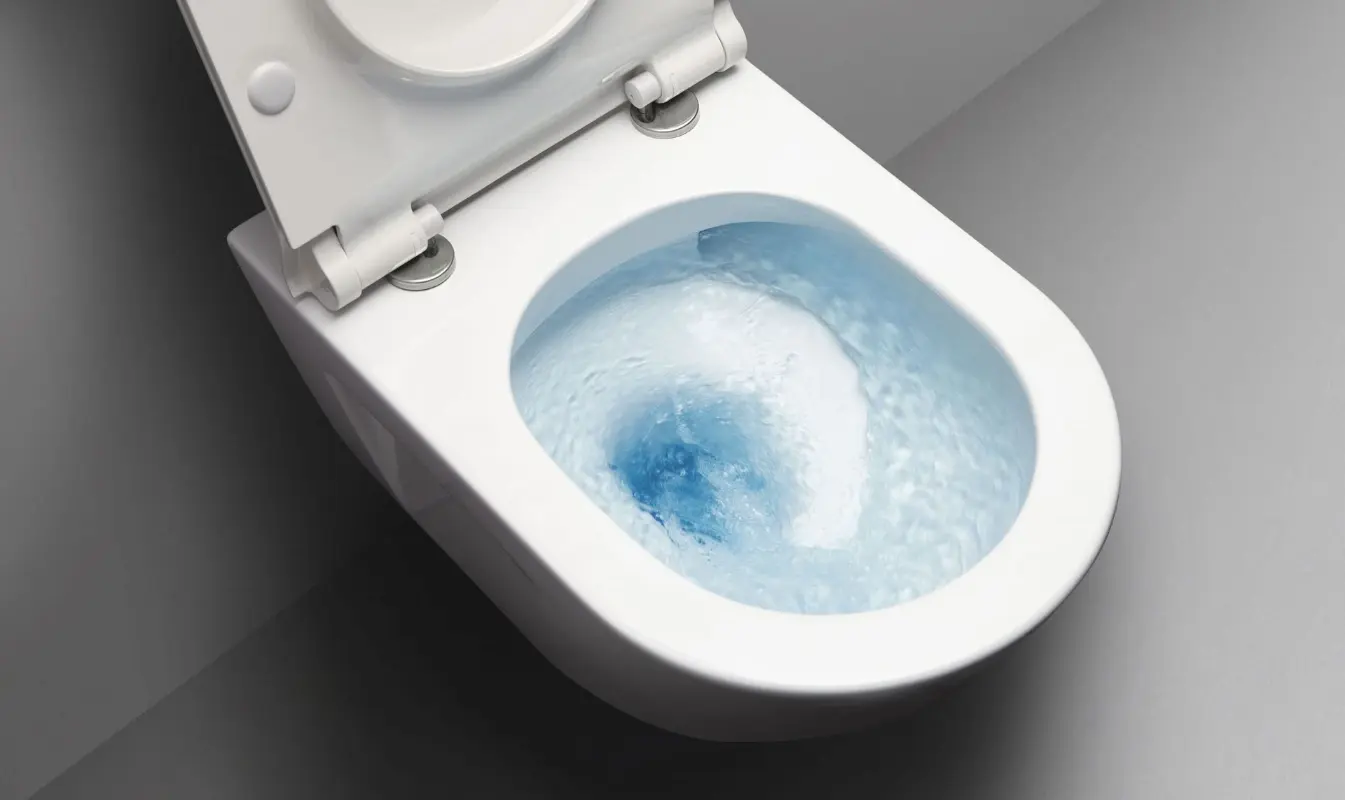
A wall-hung toilet looks as if it floats in the air: no cistern on top, no base on the floor, just a clean bowl and a flush plate on the wall. The secret is the concealed cistern, also called an installation system or in-wall frame, which is hidden inside the wall. In this article we explain what is inside it, how it works and how it is installed.
What is a concealed cistern?
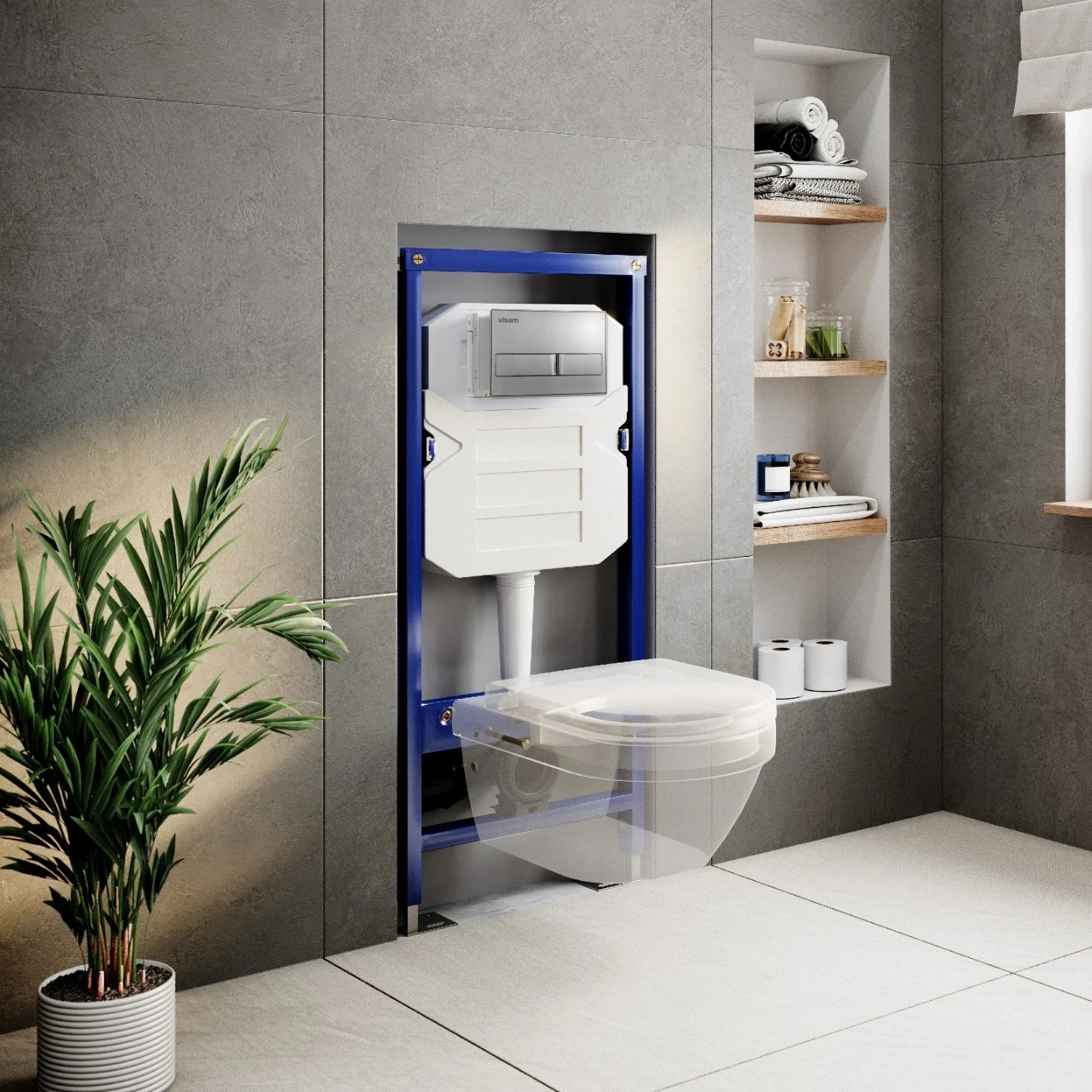
A concealed cistern is a complete system built into the wall. It consists of a strong steel frame that carries the weight of the toilet and the person using it, a plastic cistern that holds the flush water, and all the connections for water supply and drainage. Only two things stay visible after installation: the toilet bowl and the flush plate.
- Steel frame: fixed to the floor and the wall; good frames are typically rated to carry around 400 kg.
- Cistern: a slim plastic tank, usually insulated to prevent condensation on the wall.
- Fill valve and flush valve: the same parts as in a normal cistern, refilling the water and releasing it into the bowl.
- Flush plate: the buttons on the wall; it also covers the service opening for maintenance.
- Connections: a water inlet with an isolating valve, a drain outlet (usually 90 or 110 mm) and two threaded studs that hold the bowl.
How does it work?
When you press the flush plate, the button activates the flush valve inside the cistern, either mechanically with a rod or pneumatically with air pressure. The valve lifts, and the water flows down through the flush pipe hidden in the frame directly into the bowl. Most systems have dual flush, with a large button for a full flush (about 6 or 4.5 L) and a small button for a half flush (about 3 L). The volumes can usually be adjusted. After the flush, the fill valve automatically refills the cistern and closes when the water reaches the set level.
Because the cistern sits inside the wall, the flush is noticeably quieter than with a traditional toilet. For maintenance, the flush plate is simply removed: all the main parts (valves, the isolating tap) can be reached and replaced through the service opening without breaking the wall.
Types of installation frames
- Standard frames (about 112 cm high), the most common choice for most bathrooms.
- Low-height frames (about 82 cm), for installation under windows or in sloped ceilings.
- Frames for drywall, fixed to the floor and to the metal profiles of a plasterboard wall.
- Frames for solid walls, anchored into brick or concrete, or built into a block wall.
How is a concealed cistern installed?
Installation is done during the renovation, before the wall is closed and tiled. The main steps are:
- Plan the position. Check where the drain pipe and the water supply are, and how much space there is in front of the toilet (at least 60 cm is recommended).
- Set the heights. The bowl height is adjusted to the finished floor level; a seat height of about 40–43 cm suits most people. The flush plate usually ends up at about 100 cm.
- Fix the frame. The frame is screwed to the floor and the wall, then levelled vertically and horizontally using its adjustable feet.
- Connect the water. The cold water supply is connected to the inlet of the cistern, with the isolating valve inside.
- Connect the drain. The outlet bend is connected to the sewer pipe with the correct slope and sealed properly.
- Test for leaks. Before closing the wall, the cistern is filled and flushed several times and every connection is checked. This step is essential, because the wall will be closed afterwards.
- Close the wall. The frame is covered with moisture-resistant plasterboard, usually in two layers, or built in with blocks, then waterproofed and tiled. Openings are left for the flush plate, the studs and the pipes.
- Hang the toilet and fit the flush plate. The connection pipes are cut to length, the bowl is mounted on the studs and tightened, and finally the flush plate is installed and the flush volumes are adjusted.
Pros and cons
Advantages: it saves space, the floor under the toilet is completely free and easy to clean, the flush is quieter, the bowl height can be set to suit the user, and the bathroom looks clean and modern.
Disadvantages: the system costs more than a classic floor-standing toilet, it must be installed during renovation, and repairs are only possible through the flush plate opening, so it is important to choose a quality brand with available spare parts.
Tips before you buy
- Choose a frame and cistern from a reliable manufacturer, so that spare parts will be available for many years.
- Make sure the wall-hung toilet and the frame are compatible (stud spacing and outlet size).
- Have it installed by an experienced plumber and never skip the leak test.
- Keep the manual and remember which model you have, for future maintenance.
Planning a renovation? Visit the Turkuaz Bagno showroom: we will help you choose a concealed cistern, wall-hung toilet and flush plate that work perfectly together.