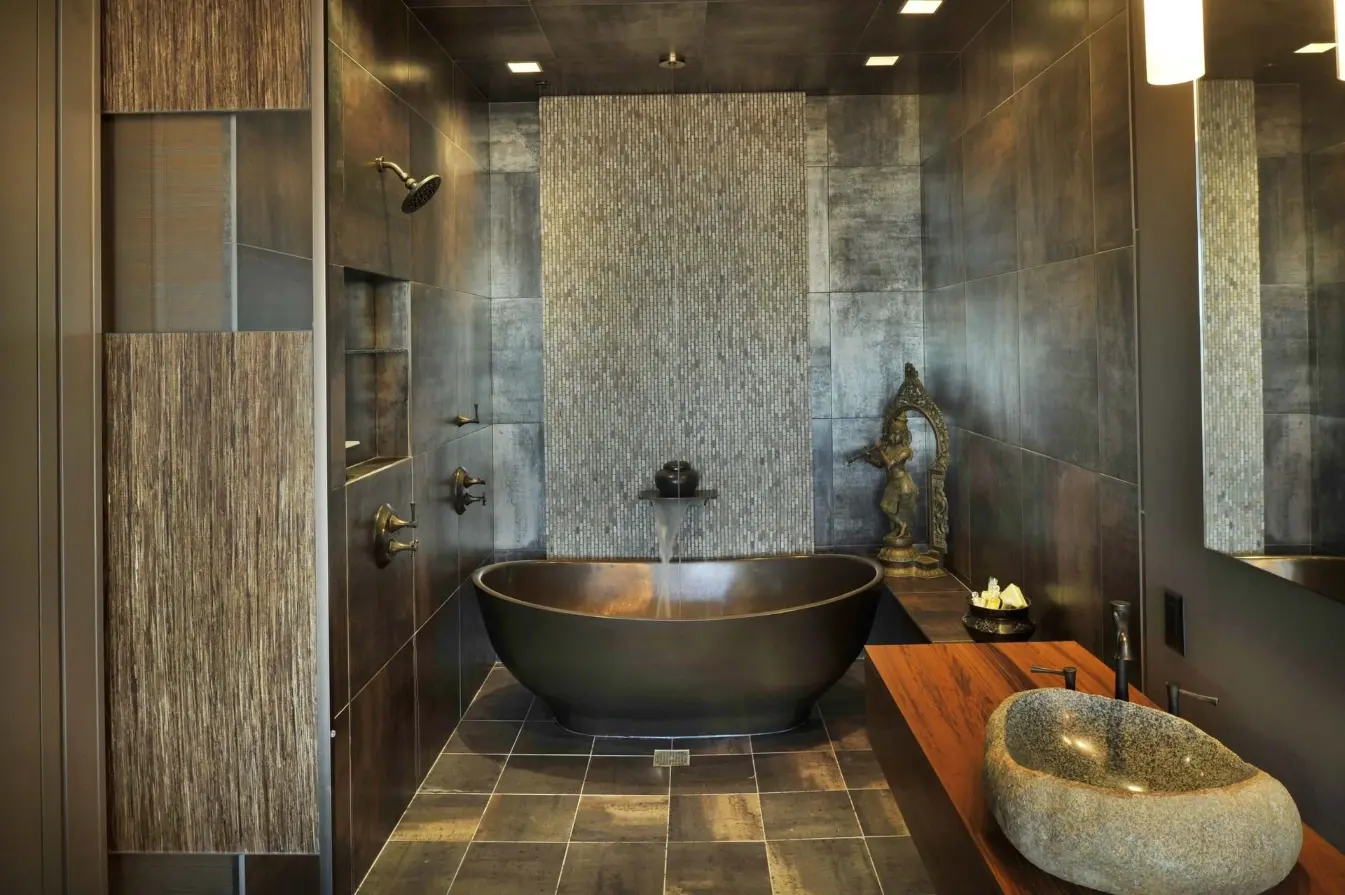
The washbasin is the piece of sanitaryware you use most often, and it has a big influence on how the whole bathroom looks and works. Basins differ above all in how they are mounted: on the counter, under it, built into it, on the wall or standing on the floor. Each method has its own look, its own cleaning routine and its own installation needs.
Here are the main types of washbasins, with their advantages, disadvantages and the situations each one suits best.
Countertop basin (over counter)
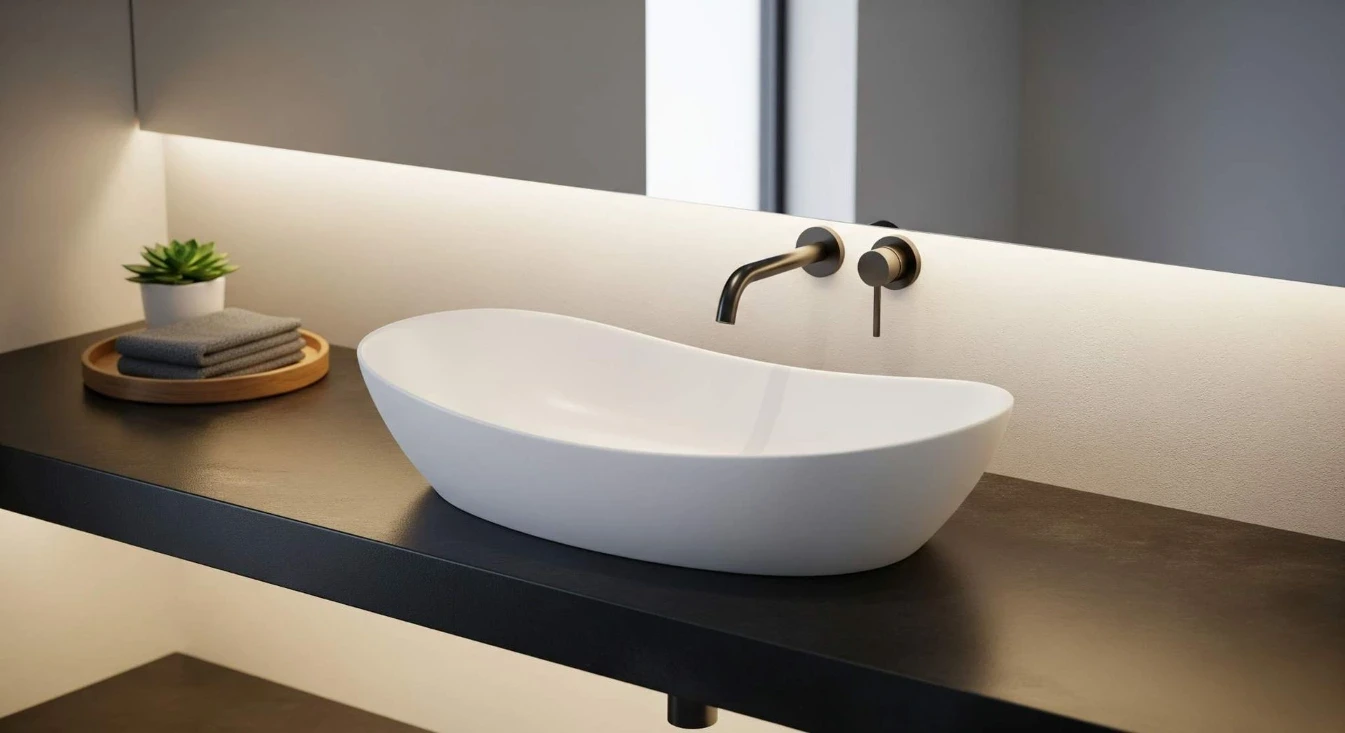
The basin sits completely on top of the counter or vanity unit, like a bowl. It is the most decorative option and comes in many shapes: round, oval, square and rectangular, in ceramic, stone or glass.
- Pros: a strong design statement, easy to install and replace, no need for a precisely cut counter
- Cons: the rim is higher, so a taller tap or a wall-mounted mixer is needed; the gap where the basin meets the counter needs regular cleaning
- Best for: modern bathrooms, guest toilets and spacious vanities where the basin is the centre of attention
Undercounter basin (undermount)
The basin is fixed from below, so its rim sits under the counter. The counter itself, usually stone, quartz or solid surface, forms a clean edge around the bowl.
- Pros: very easy to clean, as water and dirt can be wiped straight from the counter into the basin; a calm, elegant look
- Cons: needs a waterproof counter with a precisely cut and polished opening; installation and replacement are more complex
- Best for: family bathrooms and anyone who wants a clean, practical surface that is easy to keep tidy
Inset basin (drop-in)
The basin is lowered into an opening in the counter, and its rim rests on top of the counter surface. It is one of the most common and affordable solutions.
- Pros: simple installation, works with almost any counter material including laminate, good value for money
- Cons: the visible rim and the joint around it collect dirt; the look is more traditional
- Best for: practical everyday bathrooms and renovations on a budget
Semi-recessed basin
Only the back part of the basin sits on the counter or furniture, while the front sticks out over the edge. This lets you use a shallower vanity unit.
- Pros: saves depth in narrow bathrooms while keeping a full-size bowl
- Cons: the overhanging front is less protected, and the furniture under it is less accessible
- Best for: small and narrow bathrooms where every centimetre counts
Integrated basin
The basin and the countertop are made as one single piece, from ceramic, cast marble, solid surface or quartz. There are no joints between the bowl and the counter.
- Pros: the most hygienic and easiest to clean, as there are no seams where dirt or mould can collect; a seamless, modern look
- Cons: if the basin is damaged, the whole top usually has to be replaced; the size and shape are fixed by the manufacturer
- Best for: modern bathrooms, vanity units with drawers and anyone who values easy cleaning
Wall-hung basin
The basin is fixed directly to the wall with brackets or bolts, without any furniture or pedestal under it. The pipes can be hidden in the wall or covered with a decorative siphon.
- Pros: saves floor space, makes the floor easy to clean and makes a small room look larger
- Cons: no storage under the basin; the wall must be strong enough, and the pipes have to be planned in advance
- Best for: small bathrooms, guest toilets and minimalist interiors
Pedestal and semi-pedestal basins
A pedestal basin stands on a ceramic column that supports it and hides the pipes. A semi-pedestal is fixed to the wall, with a short column that only covers the pipes and leaves the floor free.
- Pros: a classic, timeless look, affordable, hides the plumbing neatly
- Cons: no storage space; the full pedestal makes cleaning around the base slightly harder
- Best for: classic and traditional bathrooms, and simple, budget-friendly solutions
Furniture basin (vanity basin)
The basin is designed to sit on a specific vanity unit, so the furniture and the basin form a matching set. It is often a variation of the integrated or semi-recessed type.
- Pros: lots of storage, a perfect fit between basin and cabinet, a finished look straight away
- Cons: you are limited to the matching furniture sizes, and the cabinet must be suitable for a humid room
- Best for: family bathrooms where storage matters
Freestanding basin
A floor-standing basin shaped like a column or monolith, usually made of stone or cast marble. It stands on its own in the room, like a sculpture.
- Pros: a very luxurious, eye-catching look that can become the focal point of the bathroom
- Cons: expensive and heavy; it needs a floor drain and water supply prepared in the floor during renovation
- Best for: large, high-end bathrooms and design projects
Corner basin
A compact basin shaped to fit into a corner, either wall-hung or on a small cabinet.
- Pros: uses space that would otherwise be wasted, ideal for very small rooms
- Cons: a smaller bowl and limited choice of designs
- Best for: guest toilets and very small bathrooms
Which material to choose?
Ceramic (vitreous china) is the most popular choice: durable, hygienic, easy to clean and affordable. Cast marble and solid surface allow seamless integrated tops and can be repaired if scratched. Natural stone looks luxurious but needs sealing and gentle cleaning. Glass is decorative but shows water marks and limescale more easily.
How to choose the right basin
Start with the size of your bathroom and how much storage you need. In a small room, a wall-hung, semi-recessed or corner basin keeps the space open; in a family bathroom, an integrated or undercounter basin on a vanity unit is the most practical. Always choose the tap together with the basin: countertop basins need taller or wall-mounted mixers, while other types use standard deck-mounted taps. Finally, check where the water and drain pipes are before you decide.
Want to see and compare these basins in person? Visit the Turkuaz Bagno showroom: our team will help you choose a basin, tap and furniture that fit your space and your style.